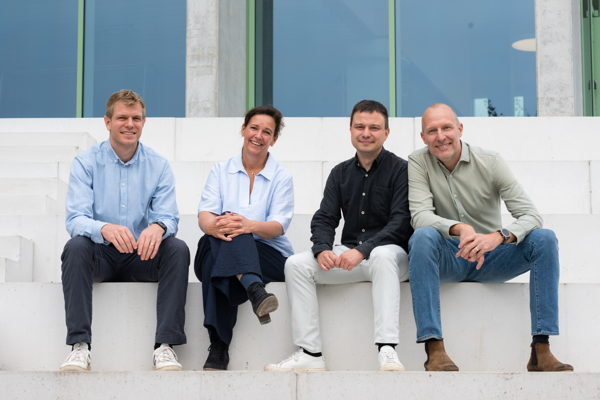
Animab raises €10 million for further development of edible antibodies

The proceedings will be used to bring its lead product to market and to expand the pipeline of antibody products in animal health

VIB spin-off Animab, which is developing a new class of orally administered antibodies for animal health, announced the successful closing of its Series A round. The proceedings will be used to bring its lead product to market and to expand the pipeline of antibody products in animal health. The investment round was led by the venture capital fund Qbic III with participation from existing investors among which V-Bio Ventures and VIB.

Animab builds on a proprietary and scalable platform technology, enabling efficient and cost-competitive generation of monoclonal antibodies for the prevention of intestinal infections in livestock. The orally administered antibodies are designed to improve the health, wellbeing, and performance of animals by controlling specific disease-causing pathogens.

Currently, the Animab lead product is a monoclonal antibody designed specifically against enterotoxigenic Escherichia coli (ETEC), the most important cause of post-weaning diarrhea in piglets globally. The company has demonstrated in vivo that the product prevents diarrhea and related clinical signs in ETEC infected piglets and will now further develop the product for regulatory approval. This product will also contribute to a more sustainable livestock production and significantly reduce antibiotic usage in animals.

Last year, Animab also received an €800,000 grant from the Flemish Agency for Innovation & Entrepreneurship (VLAIO) that supported the company in the research of the lead product. 

Alain Wille, CEO of Animab: “We appreciate the strong and continued support from our existing investors, who have enabled the company to progress to this point. We are proud to welcome Qbic as new investor, completing a strong investor syndicate. Overall, we are very excited with the progress we are making towards providing the production animal sector with an economically viable alternative for antimicrobials to control the most important pathogens.
Carla Snoeck, Manager New Ventures at VIB: “We are very excited about the significant progress made by Animab since its inception. This progress illustrates the efficacy of our tech transfer strategy and serves as a wonderful example of the positive impact that starting biotech companies can have on our society.”

Lies Vanneste

Lies Vanneste

Investor Relations Manager, VIB

Share

Latest stories

Website preview
New tool makes gene regulation easier to study—and tweak
Leuven, 2 April 2026 - Understanding how genes are switched on and off in specific cell types remains one of biology’s central challenges. While AI has made major progress in decoding the regulatory logic of DNA, applying these approaches across datasets, tissues, and species has remained difficult. In a new Nature Methods paper, a research team led by Prof. Stein Aerts (VIB & KU Leuven) presents CREsted, a software package that enables both the analysis and design of gene regulatory elements in a systematic and scalable way.
press.vib.be
Website preview
Blocking lipid production in healthy lung cells can reduce lung metastasis
Leuven, 17 March 2026 - Scientists from the VIB–KU Leuven Center for Cancer Biology, in collaboration with the Francis Crick Institute, have discovered how cancer cells can exploit healthy lung cells to support metastatic tumor growth in the lungs. In two complementary studies published in Nature Cell Biology and Cancer Discovery, they show that tumors use lipids produced by lung cells as signals, and that decreasing the lipid production of lung cells can decrease metastasis. The findings point to new therapeutic strategies that target lung cell lipid production, rather than cancer cells themselves, which may also help refine patient selection for ongoing clinical trials targeting this pathway.
press.vib.be
Website preview
Researchers identify major genetic risk factor for rare form of dementia
Antwerp, 12 March 2026 - Researchers at VIB and Antwerp University have identified a major genetic risk factor for a rare form of frontotemporal dementia. The discovery, published today in Nature Genetics, provides a biological entry point for a disease subtype that has been difficult to study. It could not only help to improve diagnosis and patient stratification, but also opens up new avenues toward targeted treatments.
press.vib.be

About VIB Press

VIB is an independent research institute that translates insights in biology into impactful innovations for society. Collaborating with the five Flemish universities, it conducts research in plant biology, cancer, neuroscience, microbiology, inflammatory diseases, artificial intelligence and more. VIB connects science with entrepreneurship and stimulates the growth of the Flemish biotech ecosystem. The institute contributes to solutions for societal challenges such as new methods for diagnostics and treatments, as well as innovations for agriculture. 

Learn more at www.vib.be.

Contact

Suzanne Tassierstraat 1 9052 Zwijnaarde

+32 9 244 66 11

press@vib.be

vib.be