.png)
Building better base editors
VIB scientists develop ITER, a sensitive, versatile, and high-throughput method to test and quantify gene editing in plant cells
CRISPR gene editing is a powerful biotechnology tool that allows scientists to alter specific DNA sequences. New research is constantly refining and improving CRISPR technology. Researchers from the team of Prof. Thomas Jacobs (VIB-UGent Center for Plant Systems Biology), together with BASF Innovation Center Gent and colleagues from the VIB screening Core and VIB Flow Core, now report an important advance in CRISPR base editing technology. Their work was funded by VLAIO and appears in Genome Biology.
The scientific world was rocked in 2012 by the development of CRISPR gene-editing tools using the DNA-cutting protein Cas9, an advance that received a Nobel Prize in 2020. CRISPR technology now has applications all across the biological sciences, from improving the crops we rely on to use in medicine treating sickle cell disease, cancer, and other diseases.
The original CRISPR technology from a decade ago did have some limitations. For instance, it was not very easy to control the types of DNA changes that were being made. The development of ‘base editors’ in 2016 changed all of that. CRISPR base editors are particularly powerful as they can replace one specific DNA base (a DNA ‘letter’) with another allowing for very precise changes in the DNA sequence.
Prof. Thomas Jacobs: “When we started the project, there were a few problems with the existing CRISPR base editors. The first was that they didn’t work that well. Only a quarter of our targets were edited. The second was that, by then, there was a large number of different CRISPR parts. Using our existing methods to test and evaluate all of the different combinations to find the best one would take too much time. So, we developed ITER.”
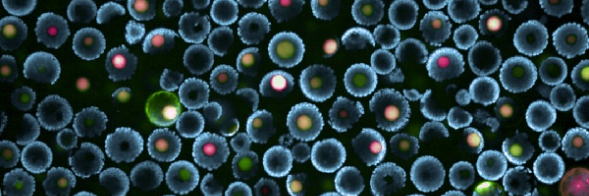
ITER, or Iterative Testing of Editing Reagents, is a sensitive, versatile, and high-throughput method to test and quantify gene editing in plant cells. It is a way to simultaneously test many potential base editors in many cells. A fully automated imaging and analysis pipeline allows the researchers to rapidly test the different editors and design the next experiment. Each iteration only takes a few weeks to complete, so optimization proceeds quickly.
In the first use of ITER, the researchers identified a variant of Cas12a (an alternative DNA-cutting protein) that efficiently performs base editing in wheat and maize cells. The first Cas12a base editors only edited about one in 200 cells. But by rapidly performing multiple rounds of testing with ITER, they were able to increase editing efficiency to about 40%.
Dr. Christophe Gaillochet, first author of the study: “Especially in plants, this improvement is a great step forward, not only because previous base editors with Cas12a didn’t perform well, but also because it gives us a much better tool for plant breeding to make our crops more resilient to challenging environments caused by climate change.”
The team is now using ITER to optimize different types of genome editing tools in a variety of plant species.
Publication
Systematic optimization of Cas12a base editors in wheat and maize using the ITER platform. Gaillochet et al. Genome Biology, 2023.

Gunnar De Winter