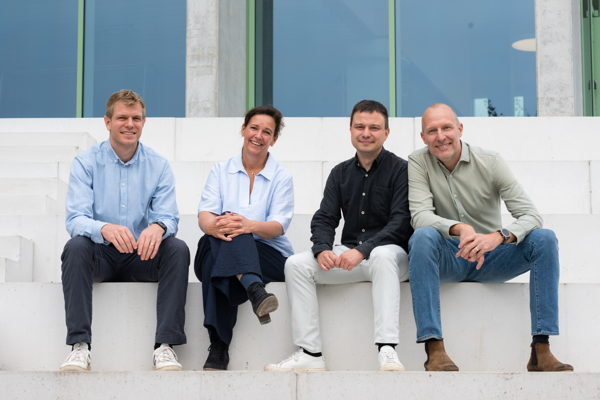
Confo Therapeutics to collaborate with Daiichi Sankyo on CNS Diseases

The collaboration agreement entails the discovery and development of small molecule agonists against an undisclosed target associated with CNS diseases

VIB spin-off company Confo Therapeutics today announced that it has entered a collaboration agreement with Daiichi Sankyo for the discovery and development of small molecule agonists against an undisclosed target associated with CNS diseases.  ​ 

Under the terms of the agreement, Confo will lead the discovery process deploying its GPCR platform to generate lead series of small molecule compounds. Daiichi Sankyo has an exclusive option to acquire a worldwide exclusive license for the resulting compounds and advance them towards clinical development and commercialization. Confo has the potential to receive upfront payments, development and commercial milestones totaling EUR 168M and royalties.

“Daiichi Sankyo has historically been at the forefront of leveraging innovative technologies to develop novel medicines. We are excited by this collaboration in which we will be using Confo’s expertise and platform to pursue a previously undruggable GPCR target in an area of high unmet medical need. As we expand the scope of our internal drug discovery and development efforts, we look forward to continuing to enter partnerships with leading innovators to create new therapeutic options for patients.”

Lies Vanneste
Lies Vanneste

Investor Relations Manager, VIB


Share

Latest stories

Website preview
Molecular keyhole sheds light on pain and epilepsy
Leuven, 21 April 2026 – Researchers at VIB, VUB, and KU Leuven have identified a tiny binding site, a molecular ’keyhole’, in the TRPM3 ion channel, a crucial sensor in pain signaling. TRPM3 is also linked to rare neurodevelopmental disorders and epilepsy. In a recent study published in Nature Communications, the researchers found that even the slightest change in this keyhole can radically switch the channel’s behavior, explaining how certain mutations can flip the effects of drugs.
press.vib.be
Website preview
Designing better membrane proteins by embracing imperfection
Brussels, 14 April 2026 — Scientists at the VIB–VUB Center for Structural Biology have uncovered a counterintuitive principle that could reshape how membrane proteins are designed from scratch: sometimes, making a protein less stable helps it fold correctly. In a study published in Proceedings of the National Academy of Sciences (PNAS), researchers demonstrate that introducing carefully placed ‘imperfections’, a strategy known as negative design, enables synthetic membrane proteins to fold and assemble efficiently in artificial membranes.
press.vib.be
Website preview
Could the future of brewing be found in a remote Scandinavian farmhouse?
A large-scale genetic study of traditional farmhouse breweries in Scandinavia and the Baltic region has uncovered a remarkable reservoir of beer yeast diversity that may resemble the rich microbial landscape of Europe’s pre-industrial breweries. The study, led by Prof. Kevin Verstrepen (VIB and KU Leuven) and published in Current Biology, suggest that this living archive of yeasts could inspire a new generation of brewing innovation.
press.vib.be

About VIB Press

VIB is an independent research institute that translates insights in biology into impactful innovations for society. Collaborating with the five Flemish universities, it conducts research in plant biology, cancer, neuroscience, microbiology, inflammatory diseases, artificial intelligence and more. VIB connects science with entrepreneurship and stimulates the growth of the Flemish biotech ecosystem. The institute contributes to solutions for societal challenges such as new methods for diagnostics and treatments, as well as innovations for agriculture. 

Learn more at www.vib.be.

Contact

Suzanne Tassierstraat 1 9052 Zwijnaarde

+32 9 244 66 11

press@vib.be

vib.be