Brain immune cells may help build Alzheimer’s plaques
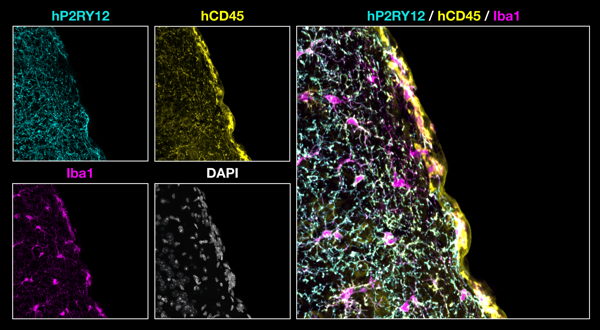
A new study led by researchers from VIB and KU Leuven shows that immune cells called microglia can actively promote the formation of plaques in Alzheimer’s disease, challenging the long-standing view that these cells serve only as defenders against plaque buildup. The findings were recently published in PNAS.
“Most studies suggest that microglia are there to clean up the brain and remove the amyloid plaques. What we discovered is that actually they're part of the problem. They generate plaques”, says Prof. Joost Schymkowitz, co-senior author of the study at the VIB-KU Leuven Center for Neuroscience. “It was thought that plaques aggregate by themselves. And it seems that the microglia, by trying to deal with the problem, amplify it.”
Alzheimer’s disease affects nearly 55 million people worldwide and is characterized by the accumulation of toxic protein aggregates in the brain known as amyloid plaques. These plaques are associated with neuronal death and progressive dementia. The brain’s microglia have been hailed as protectors against plaque accumulation in the disease, being the focus of several therapies. Nonetheless, the study shows how microglia are active producers of amyloid plaques in the earlier stages of the disease, reconsidering the therapeutic paradigm for Alzheimer’s.
The microglia functional dichotomy
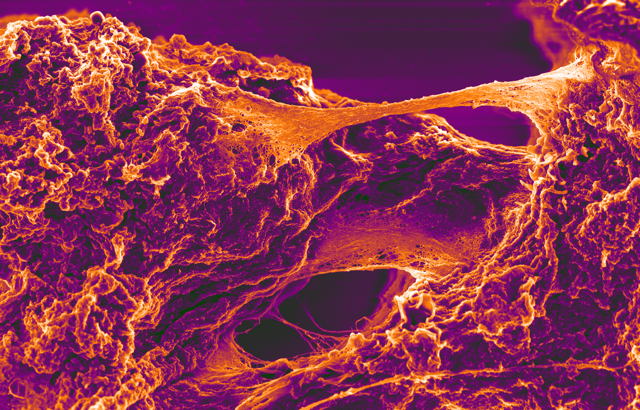
The research team shows that microglia can remodel soluble amyloid-beta (Aβ42) into extracellular fibrils with potent seeding activity (seeding is a key problem in disease: it is the process by which one aggregate gives rise to multiple new ones). These are the same type of structures that accumulate in the brains of patients with Alzheimer’s disease.
“Our results suggest that many plaques in Alzheimer’s brains may arise through cellular processes rather than spontaneous aggregation. We think this highlights a second role for microglia we were previously unaware of”, adds Prof. Frederic Rousseau, also co-senior author of the study at the VIB-KU Leuven Center for Neuroscience. “Using seeding assays, we showed that cell-generated amyloid more closely resembles brain-derived amyloid and triggers disease-relevant cellular responses, establishing a model that better reflects what happens in patients.”

Better model to study earlier stages of Alzheimer’s disease
Microglia, this study shows, can actively generate amyloid-beta fibrils that are more similar to the plaques observed in patients.
“For a long time, we've studied amyloid plaques in the lab, where they form spontaneously in small vials. However when researchers began solving amyloid structures from patients, it became clear that these structures differ markedly from those formed in laboratory conditions”, says Prof. Joost Schymkowitz. “We are now able to better generate plaques in a model that more closely resemble those observed in patients. By understanding how amyloid aggregates form and what their atomic structure looks like in patients, we can design more effective strategies to target them therapeutically”.
Several experimental therapies aim to stimulate microglia to clear amyloid plaques. The new findings suggest that, depending on the disease stage, microglia might also contribute to plaque formation - an insight that could influence how such therapies are designed.
Publication
Phagocytes as Plaque Catalysts: Human Macrophages Generate Seeding-Competent Aβ42 Fibrils with Cross-Seeding Activity, Konstantoulea, et al. PNAS, 2026. DOI:10.1073/pnas.2516774123.
Funding
The study was financially supported by the Research Foundation Flanders (FWO), Queen Elisabeth Medical, Stichting Alzheimer Onderzoek - Fondation Recherche Alzheimer (STOPALZHEIMER.BE), the National Institutes of Ageing of the National Institutes of Health, KU Leuven, and VIB.

João Cardoso