Human stem-cell model reveals a shared origin for tissue-resident macrophages
VIB researchers have developed a new human stem-cell-based model that recreates an early stage of immune-cell development and shows how a single progenitor population can give rise to specialized macrophages across different organs. The model provides a platform to study how these processes change in disease, and how they might eventually be harnessed therapeutically.
Tissue-resident macrophages are long-lived immune cells that help maintain the health of individual organs. In the brain, they include microglia and border-associated macrophages. Other organs, such as the liver, heart, and kidney, have their own specialized macrophage populations.
These cells arise very early in development. Some of their earliest precursors are formed in the yolk sac, a temporary structure that supports the embryo before organs are fully developed. Tracing the origins of these cells in humans has been difficult, as access to embryonic tissue is extremely limited.
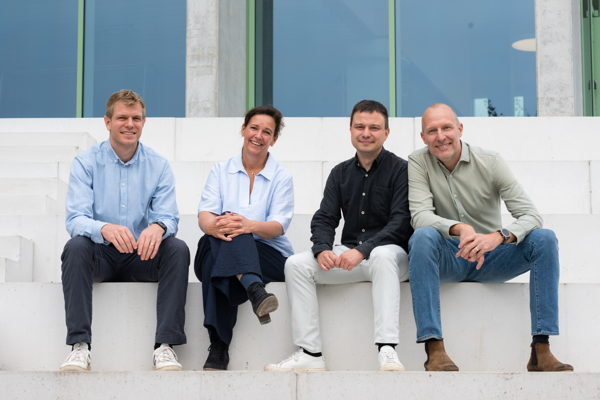
In a new study published in Developmental Cell, a research team led by Prof. Renzo Mancuso (VIB-UAntwerp Center for Molecular Neurology) and Prof. Bart De Strooper (VIB-KU Leuven Center for Neuroscience & UK DRI) circumvented this issue by recreating this early developmental stage in the lab using human pluripotent stem cells. From these cells, they generated a population called inducible yolk sac myeloid progenitors, or iYSMPs. Molecular profiling showed that these cells closely resemble progenitors found during early human development.

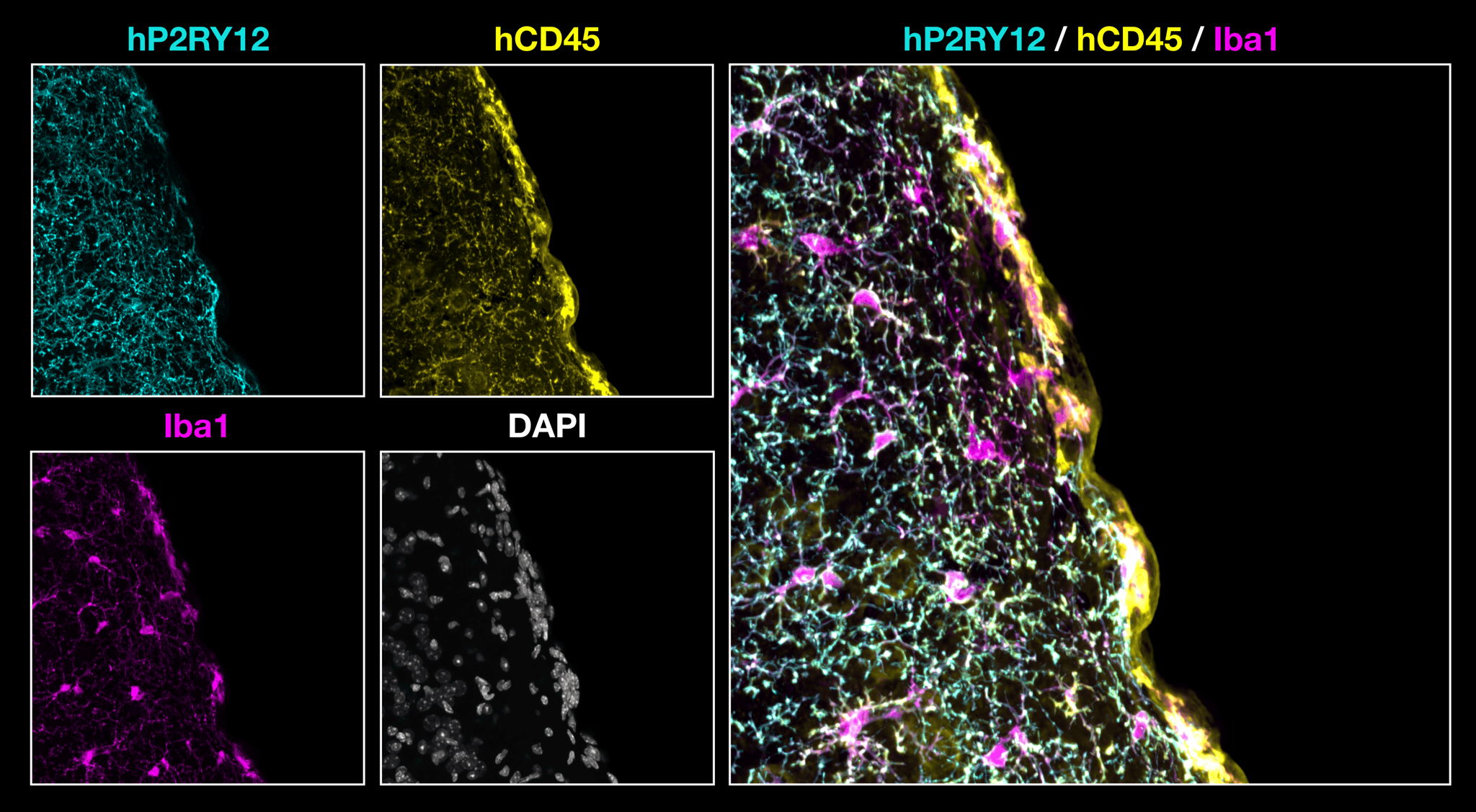
The team then tested whether these progenitors could reproduce the developmental potential of their embryonic counterparts. After transplantation into mouse models, the human cells colonized several organs and adapted to their local environment. In the brain, they developed into microglia and border-associated macrophages, while in the liver, heart, and kidney, they acquired the identity of the macrophages normally found in those tissues. Single-cell analysis showed that these transplanted cells activated tissue-specific gene programs closely matching those seen in human macrophages from the corresponding organs.
“What is exciting here is that we can now generate a human progenitor population that not only resembles the cells seen during early development, but also behaves like them,” says Mancuso. “This gives us a way to study, in much greater detail, how these cells develop and how local tissue environments shape their identity.”
The researchers found that cultures containing more iYSMPs were better able to establish themselves after transplantation than cultures containing more mature macrophages. This suggests that keeping the cells in this early progenitor state is important for generating tissue-resident macrophages efficiently. Beyond helping researchers understand how human macrophages develop, the work may also have therapeutic implications.
“Being able to generate progenitors that can develop into the right macrophage type in the right tissue could provide a starting point for exploring whether damaged or dysfunctional macrophage populations might one day be replaced,” says Mancuso.
“This could be particularly relevant in neurodegenerative diseases such as Alzheimer’s disease or frontotemporal dementia,” adds De Strooper. "Microglia and other macrophage populations are increasingly recognized as active contributors to the disease biology of Alzheimer’s. Having a system that lets us study how these cells develop, adapt, and how they potentially are replaced gives us a new way to explore their role in disease.”
Publication
Inducible human Yolk Sac Myeloid Progenitors model myeloid ontogeny and enable tissue-resident macrophage replacement in vivo. Martinez-Muriana, Fattorelli et al., Developmental Cell, 2026. DOI: 10.1016/j.devcel.2026.09.005
Funding
This work was supported by, among others, ERC, Research Foundation Flanders - FWO, the Alzheimer’s Association USA, UKRI-MRC, and Stichting Alzheimer Onderzoek. For a full list of funders, please consult the paper.
Liesbeth Aerts

Kristof Windels