Researchers uncover why humans are more sensitive than other species to a brain developmental disease
Leuven, 4 November 2026 – Researchers at VIB and KU Leuven have uncovered how mutations in the ASPM gene disrupt the development of neural stem cells that help the human brain grow. This disruption explains how these mutations cause microcephaly, a condition characterized by an abnormally small brain and head, often accompanied by intellectual disability. The discovery, published in Developmental Cell, also sheds light on how differences in brain development can make humans more susceptible to certain genetic conditions than other mammals.
“We found that some diseases of genetic origin affect the human brain more than the brains of other species because our brains develop differently. In this case, a cellular process that is particularly important for human brain development is disrupted”, says Prof. Pierre Vanderhaeghen (VIB-KU Leuven Center for Neuroscience).
Piecing together brain development
The brain is an intricate puzzle, and its development is even more convoluted. Neural cells need to properly organize and divide in the many layers that will give rise to the different human brain regions. When there are malformations in the brain due to genetic mutations that impair any of these processes, diseases can occur.
One of these diseases is microcephaly, which is most often caused by a mutation in the ASPM gene. The patients are born with a significantly smaller brain and suffer from cognitive impairment. Humans are uniquely sensitive to microcephaly, as mouse models with the same genetic mutation do not display a smaller brain than normal.
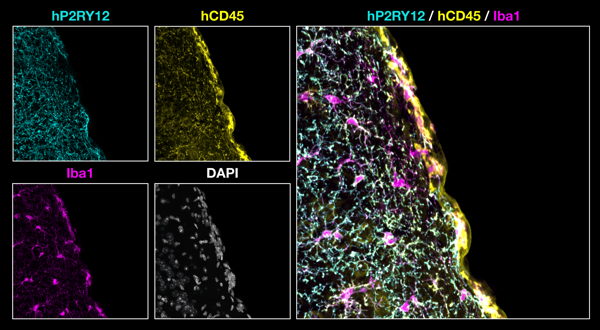
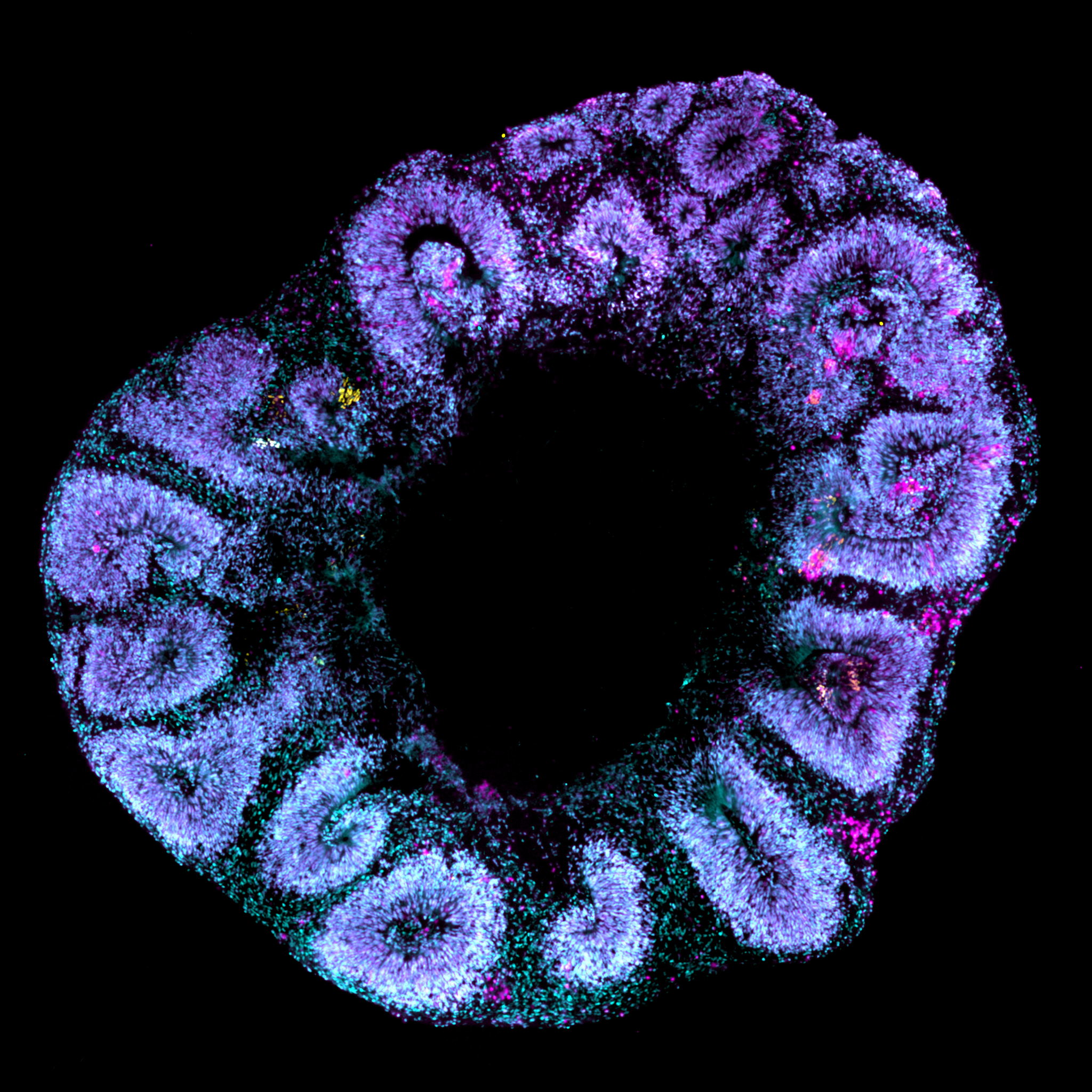
Using human cortical organoids — three-dimensional models that mimic aspects of the developing brain — the researchers discovered that mutations in ASPM disrupt the development of a specific population of neural progenitor cells that are specifically expanded in the human fetal brain.
“More specifically, we found that mutations in ASPM lead to premature displacement and impaired specification of outer radial glia cells – neural stem cells that are thought to allow for human brain expansion.”, adds Dr. Ridha Limame, co-first author (VIB-KU Leuven Center for Neuroscience). “These cortical organoids allowed us to investigate the effects of the mutation in a human developmental context, using patient-derived cells and matched controls”.

Finding more puzzle pieces
Past research has shown that ASPM mutations are present in the whole body of the patients, but it only seems to have a prominent effect during brain development. This suggests that the gene’s crucial role may be compensated by other processes except in the outer radial glia cells. Identifying the functional effect of these cells and understanding their behavior during brain development poses a future challenge.
“It's not that the gene has acquired a new function in our species. It's that the cellular process it controls has become particularly important and sensitive during human brain expansion.”, concludes Prof. Pierre Vanderhaeghen. “An important question for the future will be what these developmental defects mean for the fully grown brain: which neurons are most affected as a consequence of the developmental defect, how do they connect, and whether the consequences extend beyond having fewer neurons.”
Publication
Microcephaly-causative ASPM mutations disrupt mitotic spindle orientation and timely specification of human outer radial glia cells. Limame, van Benthem, Erkol et al. Developmental Cell, 2026. DOI: 10.1016/j.devcel.2026.10.007
Funding
This research was supported by, among others, VIB, KU Leuven, the Queen Elisabeth Medical Foundation, the Generet Foundation, the NOMIS Foundation, and Research Foundation Flanders - FWO. For all funders, see the paper's acknowledgments

Kristof Windels

João Cardoso