Molecular net boosts the power of natural biopesticides
Brussels, 19 May 2026 – Scientists at VIB and Vrije Universiteit Brussel have uncovered a previously unknown mechanism that helps a widely used biological pesticide become more effective. The study, published in Nature Communications, reveals how bacteria produce ultra-strong protein fibers that form a molecular net, trapping infectious spores and toxins into a sticky film that enhances their ability to kill insect pests.
A new piece of the biopesticide puzzle
Bacillus thuringiensis (Bt) is a bacterium widely used in eco-friendly pest control. It works by attacking insect larvae in two stages. First, it releases toxins that damage the insect's digestive system, creating an opening for spores to enter. The spores then germinate and multiply, consuming the insect from the inside. When the food source is depleted, the bacterium produces new spores and toxins that are released into the environment, ready to infect another insect. Because Bt targets only certain insects, it's considered safe for humans, other wildlife, and helpful insects like bees.
In this way, spores and toxin crystals form an intricate pair in the life cycle of the bacterium. However, one long-standing question has puzzled researchers: how do these spores and toxins stay together in the environment long enough to infect insects effectively?
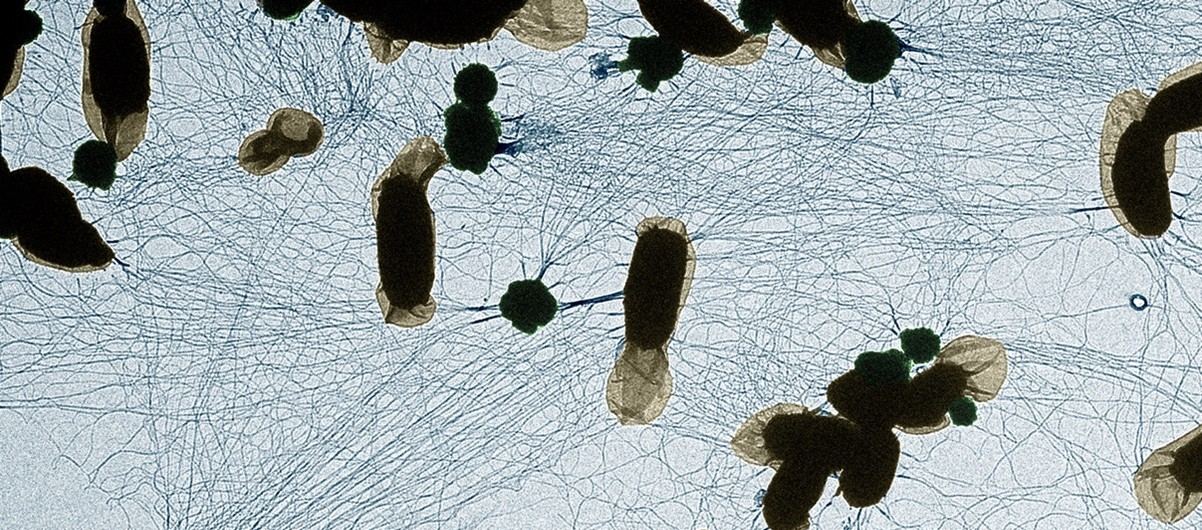
Researchers at the VIB-VUB Center for Structural Biology have now identified the answer: a previously unknown fibrous network they call ‘sporesilk’, a natural nanofiber net with remarkable properties.
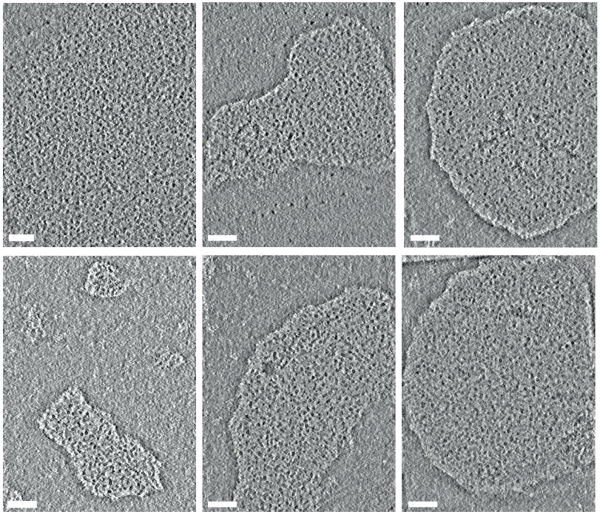
Using advanced imaging techniques, the team discovered that Bt spores and toxin crystals are embedded in a dense mesh of protein fibers just eight nanometers wide. These fibers form a highly organized, double-helical structure and are chemically crosslinked into an exceptionally stable material. The fibers assemble themselves and remain intact under extreme conditions, including heat, drought, harsh chemicals, and mechanical stress.
“This is one of the most robust protein materials we’ve seen in nature,” says Prof. Han Remaut, senior author of the study.
Keeping toxins and spores together
“The sporesilk acts as a molecular net that clusters the spores and toxin crystals into compact ‘infection units’,” says Dr. Mike Sleutel (VIB-VUB). “So, when insect larvae ingest the bacteria, they receive both the infectious spores and the toxic payload at the same time.”
When the researchers removed the gene responsible for these fibers, the clusters fell apart. As a result, the bacteria became less effective at killing insect larvae, with delayed mortality observed in experimental models.
Conversely, adding the fibers, either through genetic engineering or by simply mixing in purified fibers, restored spore – toxin clustering and significantly increased insect-killing efficiency.

“This could offer a practical way to develop more potent and reliable biopesticides while maintaining regulatory and environmental safety standards,” says Remaut.
The study also hints at broader applications. Because of their extreme durability and self-assembling nature, these protein fibers may inspire new biomaterials for use in biotechnology and engineering.
As agriculture seeks more sustainable solutions, understanding and harnessing natural systems like these could play a key role in reducing reliance on chemical pesticides.
Publication
Auto-crosslinking sporesilk fibers promote endospore and Cry toxin clustering. Sleutel, Sogues, and Remaut. Nature Communications, 2026. DOI: 10.1038/s41467-026-70495-z
Funding
This work was supported by VIB, EMBO, and the Marie Skłodowska-Curie Actions.

Kristof Windels

Gunnar De Winter