Scientists discover new gatekeeper cell in the brain
Ghent, 12 February 2026 – VIB and Ghent University researchers have identified and characterized a previously unknown cellular barrier in the brain, which sheds new light on how the brain is protected from the rest of the body. In a study published in Nature Neuroscience, the scientists also reveal a new pathway by which the immune system can impact the brain.
Prof. Roosmarijn Vandenbroucke (VIB–UGent Center for Inflammation Research): “These findings reveal how vulnerable and protectable the brain is, opening new perspectives for more targeted interventions in brain disorders.”
The brain is protected from the rest of the body by multiple barriers that maintain a stable, tightly regulated environment and defend it against harmful substances and pathogens. The most well-known of these barriers is the blood-brain barrier but another critical interface is the choroid plexus, a small structure found within the brain's fluid-filled spaces, which produces cerebrospinal fluid. However, despite its importance, scientists know surprisingly little about the choroid plexus’ detailed cellular structure and how it protects the brain.
A new line of defense for the brain
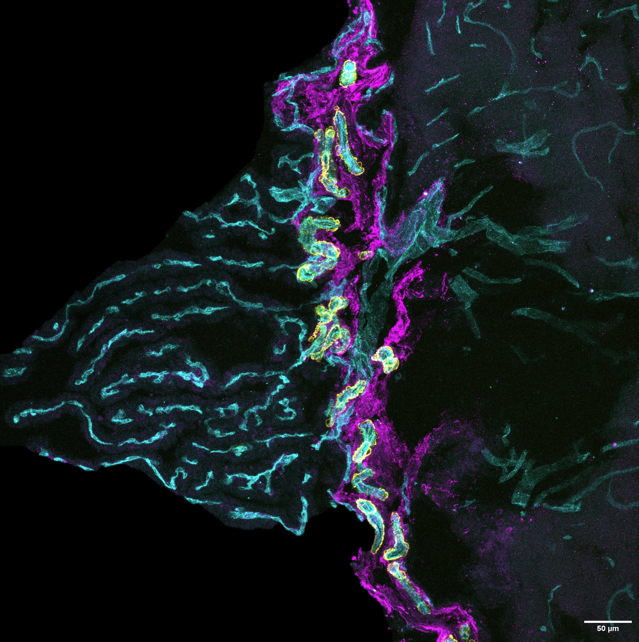
Researchers from the Vandenbroucke lab at the VIB-UGent Center for Inflammation Research set out to unravel this puzzle. Using advanced gene sequencing techniques and high-resolution microscopy, the research team identified a unique population of cells located at the base of the choroid plexus that they coined the base barrier cells. These cells are linked together by tight junctions, molecular rivets that effectively form a seal. This barrier provides a functional compartmentalization of the choroid plexus, the brain, and the cerebrospinal fluid.

“We’ve uncovered a new line of defense for the brain,” explains Prof. Vandenbroucke (VIB-UGent). “These cells form a smart, dynamic gate at a location we hadn’t fully appreciated. It’s exciting because it not only answers a fundamental anatomical question but also gives us a new target for understanding brain disease.”
A dynamic barrier vulnerable to disease
The team’s work shows that this barrier is not static. Under healthy conditions, it effectively limits the movement of even small molecules from the choroid plexus’ blood-rich core into the surrounding cerebrospinal fluid and brain tissue. However, during systemic inflammation, such as that caused by a severe infection, the barrier becomes compromised.
“We see that the base barrier cells become vulnerable during inflammation, potentially allowing harmful substances and cells to enter the central nervous system,” explains Dr. Daan Verhaege, who completed his PhD in the Vandenbroucke lab.

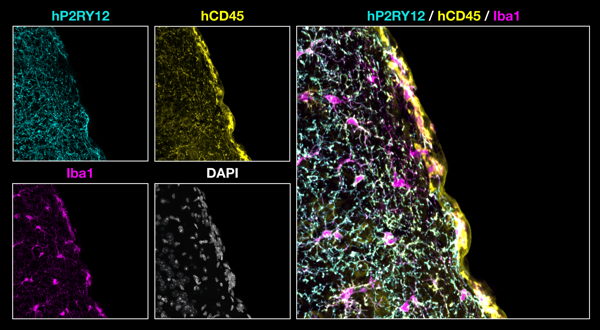
The base barrier cells emerge early in development and are maintained throughout life. Importantly, the researchers confirmed that these cells are present not only in mouse brains but also in human brains, making the findings highly relevant to human health and disease.
This discovery opens new avenues for investigating neurological conditions and neuroinflammation, and may lead to novel therapeutic strategies aimed at strengthening this gatekeeper barrier.
Publication
Base barrier cells provide compartmentalization of choroid plexus, brain and CSF. Verhaege et al., Nature Neuroscience 2026
Funding
This work was funded by the Research Foundation Flanders (FWO) and the Baillet Latour Grant for Medical Research.
Special thanks to the VIB Bioimaging Core, VIB Flow Core and VIB Single Cell Core for training and support, and to VIB Tech Watch for early access grants.