Hidden protein recycling hubs discovered inside human sperm cells
New study reveals unexpected structures that may help shape fertility and early embryonic development
Brussels, 1 September 2026 – Researchers at VIB, VUB, and the Medical Research Council Laboratory of Molecular Biology (UK) have discovered a hidden feature of human sperm cells. Using advanced imaging technologies, they discovered specialized compartments within the sperm nucleus packed with proteasomes, which are responsible for breaking down and recycling proteins. The findings, published in Nature Structural & Molecular Biology, offer an unprecedented look inside sperm cells and could open new avenues for understanding male fertility.
In short:
- Scientists co-led by Prof. Tom Dendooven (VIB-VUB Center for Structural Biology) discovered previously hidden compartments inside human sperm nuclei that are packed with proteasomes, molecules that recycle proteins.
- Using advanced cryo-electron microscopy, the team revealed how these structures are organized and uncovered unique features of sperm-specific proteasomes.
- The compartments appear during the final stages of sperm development and may play an important role in fertility and early embryonic development.
Tiny cavities with an important job
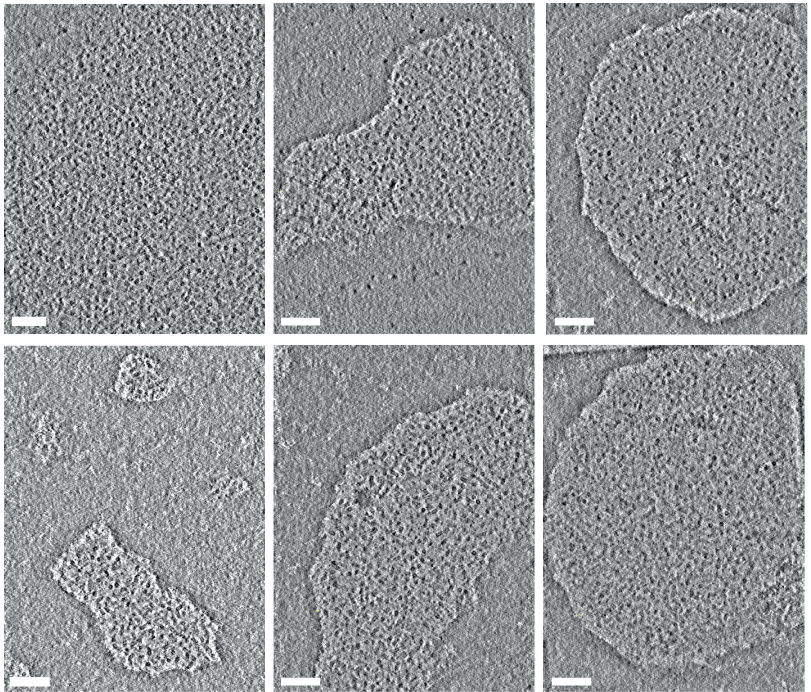
In human sperm cells, DNA is packed more tightly than almost anywhere else in nature. Yet the researchers found that the nucleus of these cells is not as densely filled as previously thought. Instead, it contains small DNA-free cavities that act as dedicated hubs for proteasomes, molecules that 'recycle' proteins and so help cells stay functional.
Using cryo-electron tomography, a technique that allows researchers to examine cells in their native state at extremely high resolution, the team showed that these cavities contain large numbers of proteasomes organized into distinct clusters. Interestingly, these cavities were first observed by microscopists many years ago, who named them 'lacunae'. However, what they contain and whether they play an important biological role have remained largely unknown.
“We were surprised to find that the human sperm nucleus contains so many of these specialized compartments and that they were filled with proteasomes,” says Prof. Tom Dendooven (VIB-VUB Center for Structural Biology). “It reveals an unexpected level of organization inside the sperm head and suggests these structures have an important biological role.”
The team not only mapped where these protein-recycling molecules are located, but also determined their structure in remarkable detail. This revealed unique features that distinguish sperm proteasomes from those found elsewhere in the body. Among the discoveries was a previously unknown variant of a sperm-specific proteasome component.

Linking protein recycling to sperm development
To understand when these structures appear, the scientists examined tissue from human testes. They found that the proteasome-rich compartments emerge during the final stages of sperm development, when the genetic material inside the cell is being dramatically reorganized and compacted.
This timing suggests that the proteasomes may help orchestrate key steps in the maturation of sperm cells. Because defects in this process can affect fertility, the findings provide an important foundation for future research into male reproductive health. These proteasomes could remain active after the sperm enters the egg and may help remodel the paternal genome during the earliest stages of embryonic development.
“These findings give us a new framework for studying how sperm cells develop and what happens immediately after fertilization,” says Dendooven. “There is still much to learn, but we can now start exploring these processes with an unprecedented level of detail.”
Towards a better understanding of fertility
By combining cutting-edge imaging, structural biology, and human tissue analysis, the researchers have produced the first detailed map of how proteasomes are organized inside the human sperm nucleus. The study provides new insight into the biology of sperm cells and establishes a foundation for future work on fertility, reproductive health, and early embryonic development.
Publication
Molecular architecture and spatial organization of proteasomes in the human sperm nucleus. Kolata et al., Nature Structural & Molecular Biology, 2026. DOI: 10.1038/s41594-026-01870-z.
Funding
This research was supported by the UK Research and Innovation (UKRI) Medical Research Council and the Wellcome Trust.

Gunnar De Winter