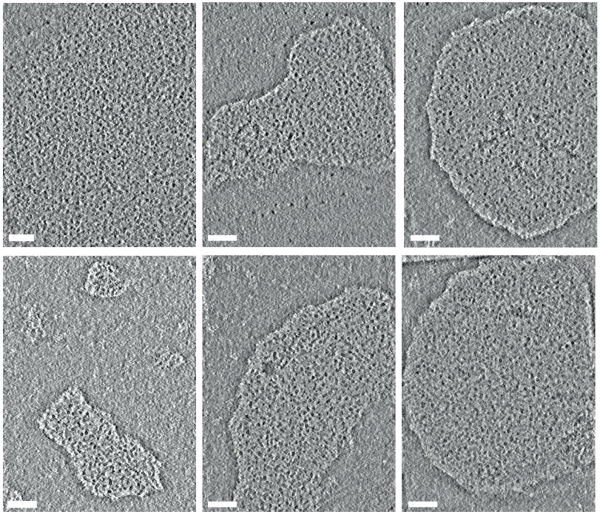
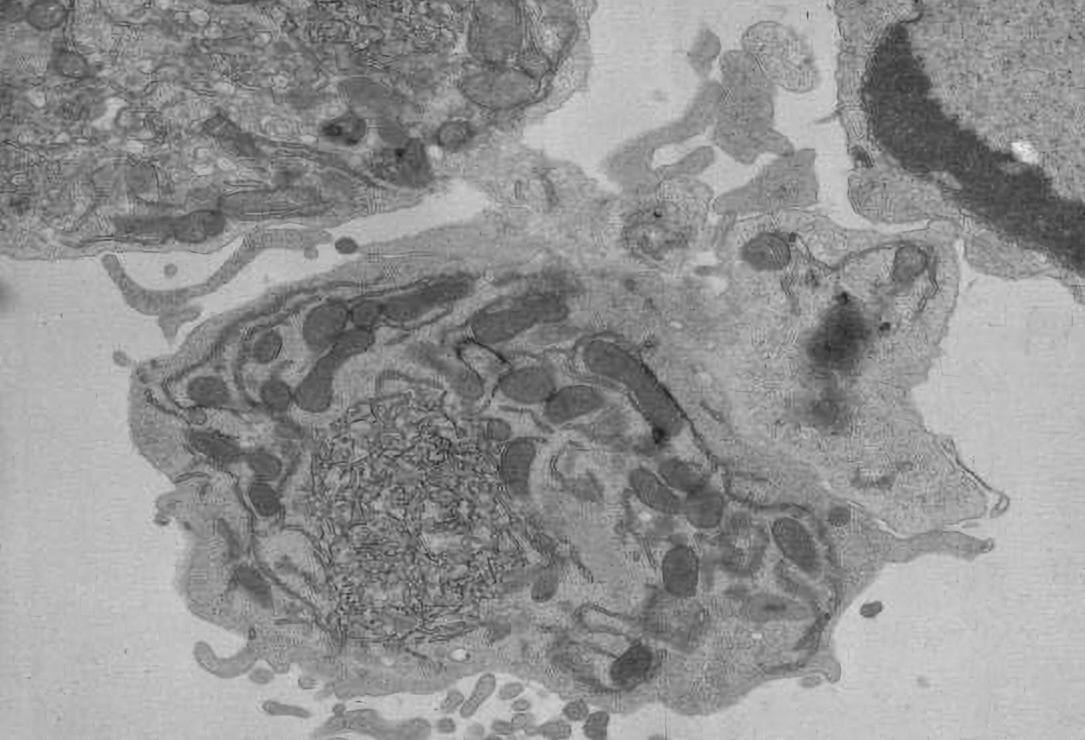
%20(1).jpeg "A conventional type 1 dendritic cell with IRE1 knocked out. The 'tangled ribbons' are the malformed endoplasmic reticulum, probably due to excess cholesterol. (@Victor Bosteels, Sophie Janssens, VIB)")
Immune cells rely on a cholesterol sensor to maintain balance
VIB researchers uncover an unexpected mechanism that helps dendritic cells process dying cells and maintain immune tolerance
Ghent, 11 August 2026 – Every day, billions of cells in our body die and are removed as part of normal tissue maintenance. This continuous clean-up process is essential for keeping the immune system in balance and preventing harmful immune reactions against healthy tissues. Researchers at VIB and Ghent University have now discovered that a protein best known for sensing cellular stress also acts as a cholesterol sensor in specialized immune cells. Their findings reveal how these cells safely process dying cells and maintain immune homeostasis. The work appears in Nature Communications.
Cleaning up comes at a cost
A specialized group of immune cells called conventional type 1 dendritic cells, or cDC1s, constantly engulfs dying cells throughout the body. This process helps maintain immune tolerance while also allowing the immune system to monitor tissues for signs of disease.
But taking up dying cells comes with a challenge. Each engulfed cell delivers a substantial amount of lipids, including cholesterol. To function properly, dendritic cells must carefully manage this influx and restore their internal balance.
The new study identifies the protein IRE1 as a crucial regulator for this process. IRE1 is widely known as one of the cell's major stress sensors. It typically helps cells respond when proteins are misfolded within a cellular compartment called the endoplasmic reticulum. The VIB team discovered that, in dendritic cells, IRE1 performs a very different job.
"We found that IRE1 is activated when dendritic cells engulf dying cells and take up large amounts of cholesterol," says Prof. Sophie Janssens (VIB-UGent Center for Inflammation Research), senior author of the study. "Rather than responding to classical cellular stress, IRE1 acts as a sensor that helps these immune cells adapt to the metabolic consequences of processing dying cells."
The researchers showed that when IRE1 was removed, cholesterol accumulated inside the cells, which negatively affected their survival and their ability to perform key immune functions.

Controlling cholesterol
The team also discovered how IRE1 helps dendritic cells cope with the large amounts of cholesterol they take in from dying cells.
When activated, IRE1 switches on a molecular pathway that allows cells to remove excess cholesterol. One important effect is the cleaving of a certain microRNA that prevents the expression of ABCG1, a transport protein that helps shuttle surplus cholesterol out of the cell. This prevents cholesterol from building up to harmful levels and enables dendritic cells to continue functioning normally.
Without IRE1, this protective mechanism breaks down. Cholesterol accumulates inside the cells, eventually damaging them and reducing their ability to survive.
Remarkably, the researchers could rescue these IRE1-lacking cells by boosting cholesterol removal with reconstituted HDL particles, which highlights how important cholesterol balance is for healthy immune function.
Implications for immune regulation
Dendritic cells play a crucial role in presenting antigens to T cells and shaping immune responses. The researchers found that mice lacking IRE1 in dendritic cells were less efficient at activating T cells using material derived from dying cells.
"Our findings place IRE1 at the center of how dendritic cells sense and process dying cells," says first author Dr. Victor Bosteels (VIB-UGent). "The study uncovers an unexpected connection between cholesterol metabolism and immune tolerance, adding a new layer to our understanding of how the immune system maintains balance."
Together, these findings identify IRE1 as a key regulator of immune homeostasis and reveal an unexpected function for a protein previously associated mainly with cellular stress responses. The insights may help researchers better understand inflammatory diseases, autoimmunity, and immune regulation, while providing new perspectives on how immune cells integrate metabolic and immunological signals.
Publication
The unfolded protein sensor IRE1 is essential for homeostatic dendritic cell maturation. Bosteels et al. Nature Communications, 2026. DOI: 10.1038/s41467-026-75716-z
Funding
This research was supported by the ERC and Research Foundation Flanders (FWO).

Gunnar De Winter

Kristof Windels