Researchers develop more reliable platform to test antibody medicines
Ghent, 30 January 2026 – An international research consortium has validated a new platform that could change how antibody medicines are tested and brought to patients. The work, published in Science Immunology, highlights problems during conventional antibody drug testing and introduces a next-generation mouse model that makes it possible to predict the effects of antibody drugs in humans more accurately.
Antibody-based medicines are widely used to treat cancer, autoimmune diseases, and infections. Many of these drugs look extremely promising during early testing. However, a large number later fail in clinical trials or show unexpected side effects. This slows down drug development, drives up costs, and can put patients at risk.
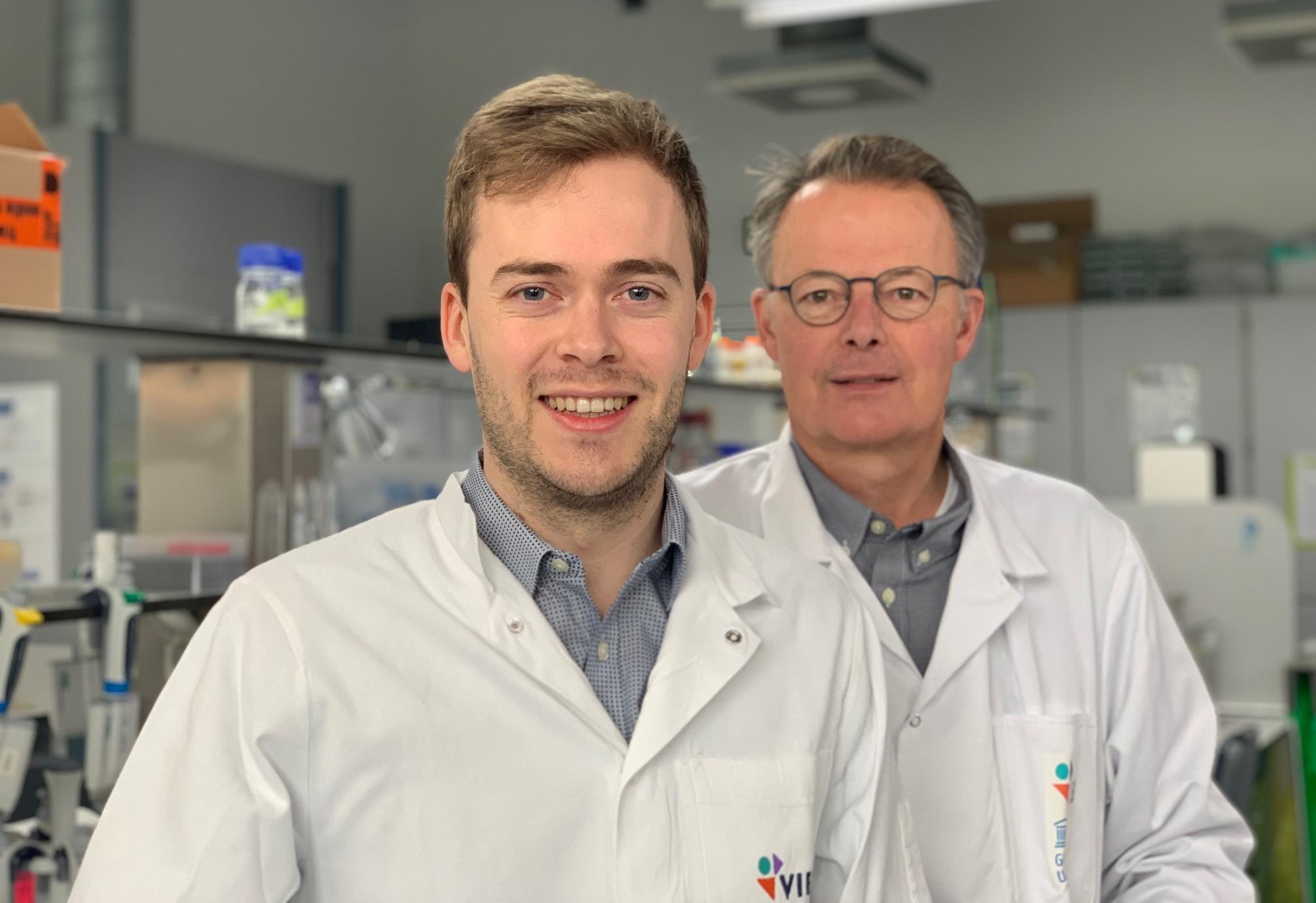
“Our new platform allows us to study antibody function in conditions that are much closer to what happens in patients,” says Prof. Bart Lambrecht (VIB–UGent Center for Inflammation Research), senior author of the study. “That means we can make better, more confident decisions much earlier in drug development.”

Why early antibody testing can be misleading
Before new medicines are tested in humans, they are studied in the laboratory, including in culture systems, lab mice, and non-human primates to estimate their effects and toxicities. These systems have been essential for medical progress, but new research shows they do not always reflect how the human immune system works, especially for antibody drugs.
Antibodies, particularly Immunoglobulin G (IgG), the blueprint for all approved therapeutic antibodies, do more than bind to a target. Their tail region, known as the Fc domain, sends instructions to the immune system. These instructions are read by Fc gamma (Fcγ) receptors on immune cells and determine whether immune cells kill infected or cancerous cells, remove harmful targets, or dampen inflammation.
The challenge is that these Fcγ receptors differ substantially between species. As a result, the same antibody can trigger very different immune responses depending on the biological system in which it is tested.
Key biological differences that matter
The study shows that the human immune system responds to antibody drugs in ways that are not always captured during early testing, with real-world consequences. In people, several immune cell types are highly responsive to, while in laboratory models these same responses are often much weaker or absent. Even more importantly, human platelets, the cells that control blood clotting, can be directly activated by certain antibodies. This mechanism does not exist in mice, meaning dangerous clotting risks can remain hidden during early testing. Other immune cells can also react in opposite ways depending on the system used.
Because of these differences, antibody drugs can appear safe or effective early on, only to behave very differently in patients. A well-known example is the development of anti-CD40L antibodies, which progressed to clinical trials after reassuring early results but later caused severe blood clots and patient deaths. These risks were not detected sooner because crucial human-specific immune interactions were invisible in standard preclinical studies.
A platform built around human immune biology
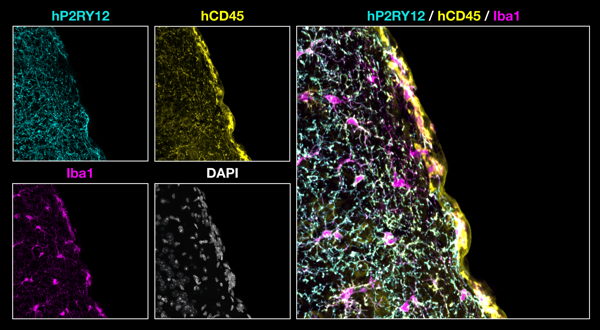
To solve this problem, the researchers first created a detailed map showing how Fcγ receptors are distributed across immune cells in humans and commonly used testing systems. They then introduced a new mouse model, named named genO-hFcγR, that closely reflects how the human immune system handles antibodies. This ensures that antibodies interact with immune cells in a way that closely mirrors human immune biology, including how receptor expression changes during inflammation.
In contrast to existing humanized mouse models, this new model uses a more precise genetic ‘knock-in’ strategy and is commercialized by genOway, the company that created the model, guaranteeing access for academic researchers and drug developers alike.

Clearer answers, earlier
The new platform has been rigorously validated across multiple disease settings by consortium members but also leading biopharmaceutical companies
Given that hFcγR are highly species-specific, the development and validation of the genO-hFcγR mouse model is a scientific breakthrough that required combining a broad range of expertise, from mouse genetic engineering to human immunology, what was made possible through a strong partnership with consortium partners;” says Dr. Fabiane Sônego (genOway), who was responsible for coordinating the project.
As a result, the platform enables researchers to reliably rank antibody candidates by true biological effectiveness, assess how well antibodies remove specific immune cells, and evaluate how antibodies limit disease progression for example in the context of cancer. These types of comparisons are difficult or impossible with conventional approaches.
According to dr. Karel Van Damme (VIB–UGent, UZ Gent), first author of the study, “Modern antibody development increasingly depends on subtle molecular fine-tuning. Our platform allows different antibody designs to be compared head-to-head in a biologically meaningful way, reducing guesswork.”
Benefits for patients and healthcare
Beyond its scientific importance, the platform offers major economic advantages for pharmaceutical and biotechnology companies. Better early-stage predictability can reduce costly late-stage failures, shorten development timelines, and lower overall research and development costs.
At the same time, more accurate early evaluation supports improved patient safety. Antibody candidates with higher risk profiles can be identified sooner, while the most promising therapies can move forward with greater confidence.
The approach also aligns with evolving expectations from regulatory authorities. Agencies such as the U.S. Food and Drug Administration (FDA) increasingly promote the use of advanced, more predictive models to strengthen evidence before clinical testing.
A biopharmaceutical company has already relied on the platform to support its IND submission, a regulatory step required by the FDA to initiate clinical studies in the US.
A global partnership
The work was carried out by an international partnership between academic and industry experts, including VIB–Ghent University, argenx (Belgium), genOway (France), and Innate Pharma (France).
As antibody medicines continue to play a growing role in healthcare, this new platform offers a clearer and safer path from laboratory research to real treatments, helping effective therapies reach patients faster and at lower cost.
Publication
Cross-species cellular mapping and humanization of Fcγ receptors to advance antibody modeling. Van Damme K.F.A., et al. Science Immunology, 2026.
Questions from patients
A breakthrough in research is not the same as a breakthrough in medicine. The realizations of VIB researchers can form the basis of new therapies, but the development path still takes years. This can raise a lot of questions. That is why we ask you to please refer questions in your report or article to the email address that VIB makes available for this purpose: patienteninfo@vib.be. Everyone can submit questions concerning this and other medically-oriented research directly to VIB via this address.
Press contact:
Sooike Stoops: +32 474 28 92 52
Dr. Karel Van Damme/Prof. Bart Lambrecht: +32 9 332 04 57