Improving melanoma treatment by blocking an enzyme
Study shows HPGDS plays a key role in immunotherapy resistance
Leuven, 7 April 2024 - About 65% of melanoma patients do not respond to immunotherapy. New work by the team of Prof. Max Mazzone (VIB-KU Leuven Center for Cancer Biology) discovered that an enzyme called HPGDS (expressed in a specific subset of macrophages), plays a key role in immunotherapy resistance. Blocking HPGDS may be a new way to overcome immunotherapy resistance in melanoma patients and potentially in other tumors facing similar challenges. The results of this study were published in Cancer Discovery, a journal of the American Association for Cancer Research.
Immune suppression
The field of cancer immunotherapy has witnessed exciting therapeutic advances in the last decade, particularly in the treatment of melanoma, a highly aggressive form of skin cancer. However, approximately 65% of melanoma patients still do not respond to immune checkpoint blockade (ICB) therapies. The immunosuppression induced by tumor-associated macrophages (TAMs) may be pivotal in this process. TAMs have been shown to impede immune system function, thereby fostering tumor growth and metastasis dissemination. Thus, reprogramming TAM phenotype away from their immunosuppressive state might boost cancer treatments.
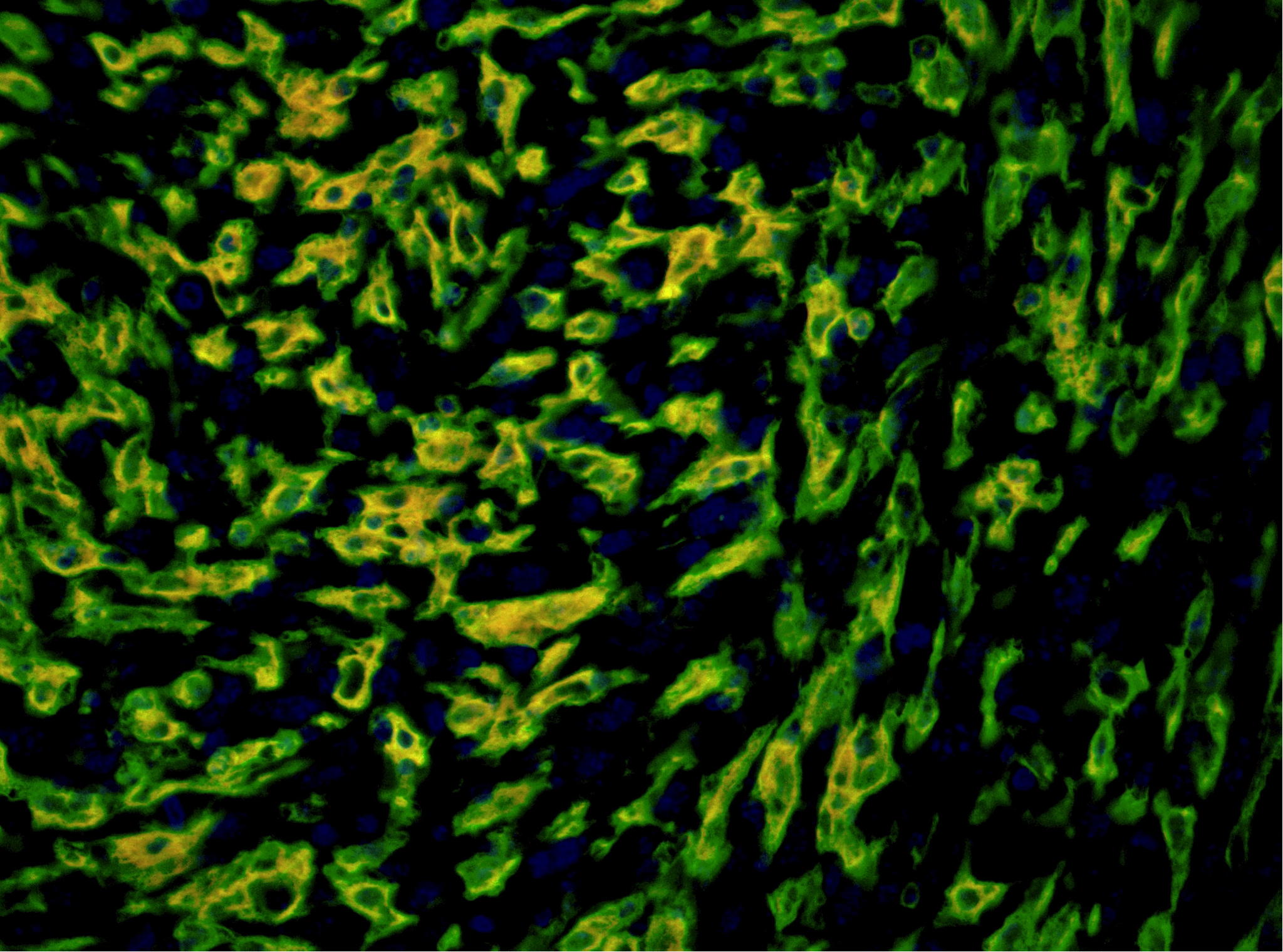
New work by the team of Prof. Max Mazzone (VIB-KU Leuven) and colleagues zooms in on a specific enzyme known as hematopoietic prostaglandin D2 synthase (HPGDS), which is produced by TAMs. HPGDS promotes the formation of a metabolite called prostaglandin D2 (PGD2), which, in turn, helps cancer cells to resist treatment by blocking the activity of T-cells, which are vital for attacking tumors.
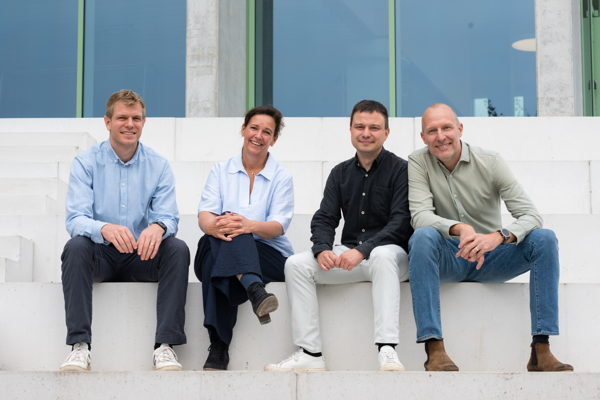
.jpg "Dr. Rosa Trotta, first author of the study, and Prof. Max Mazzone.")
Reprogramming TAMs
“By analyzing the expression of genes related to the immune response in patients who responded to immune checkpoint blockade therapies compared to those who did not, we found that HPGDS levels were high in non-responding patients during treatment, whereas were downregulated if the treatment was working and T-cells were then activated against the tumor” says Dr. Rosa Trotta, first author of the study.
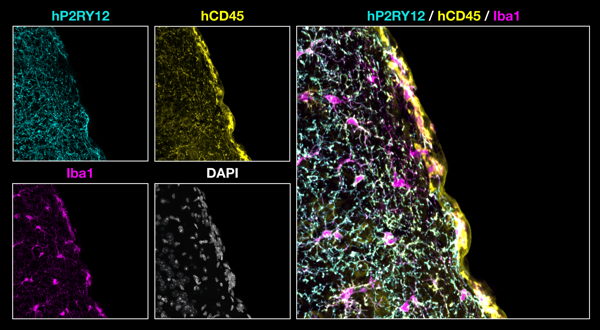
By employing genetic deletion of HPGDS in macrophages and using pharmacological inhibitors in mouse and humanized models, the researchers proved a remarkable shift in the macrophages' behavior from promoting tumor growth to supporting a more robust and anti-tumoral immune response.
“Targeting HPGDS not only enhanced the recruitment and activation of T-cells per se,” says Prof. Max Mazzone, “but also showed promise in overcoming resistance to existing therapies. Our findings suggest that blocking HPGDS or the two downstream receptors may be a new potential strategy for improving treatment options for melanoma patients and perhaps others facing similar challenges.”
This study suggests that HPGDS inhibitors or PGD2 receptor blockers could serve as new therapeutic agents, either alone or in combination with existing treatments for melanoma and other cancers (i.e., pancreatic ductal adenocarcinoma) that show similar resistance mechanisms. As the research progresses, the team emphasizes the need for further studies to validate these findings in clinical settings.
Publication
Activated T cells break tumor immunosuppression by macrophage re-education. Trotta et al. Cancer Discovery, 2025.
Funding
The research was supported by ERC, Stichting tegen Kanker, and FWO.

Joran Lauwers
Questions from patients
A breakthrough in research is not the same as a breakthrough in medicine. The realizations of VIB researchers can form the basis of new therapies, but the development path still takes years. This can raise a lot of questions. That is why we ask you to please refer questions in your report or article to the email address that VIB makes available for this purpose: patienteninfo@vib.be. Everyone can submit questions concerning this and other medically-oriented research directly to VIB via this address.
About the VIB-KU Leuven Center for Cancer Biology
Cancer has many causes. Often it is a combination of lifestyle, environmental factors and genetic variation. We need to fight cancer on many fronts, and this can only be done by using knowledge. The VIB-KU Leuven Center for Cancer Biology researchers unravel new mechanisms in order to develop both specific diagnostic methods and treatments.